Duplex Board vs. Cardboard: Which One Should You Use?
Choosing the right packaging material plays a crucial role in protecting products, controlling logistics costs, and shaping your brand image. With the rapid growth of e-commerce, retail, and exports, businesses now rely heavily on cardboard packaging and duplex board packaging to meet both performance and presentation needs.
Among the most commonly used materials today are cardboard and duplex board. While both serve packaging purposes, their structure, strength, appearance, and cost differ significantly. This guide will help you clearly understand their differences so you can choose the most suitable option for your business needs.
What Is Duplex Board?
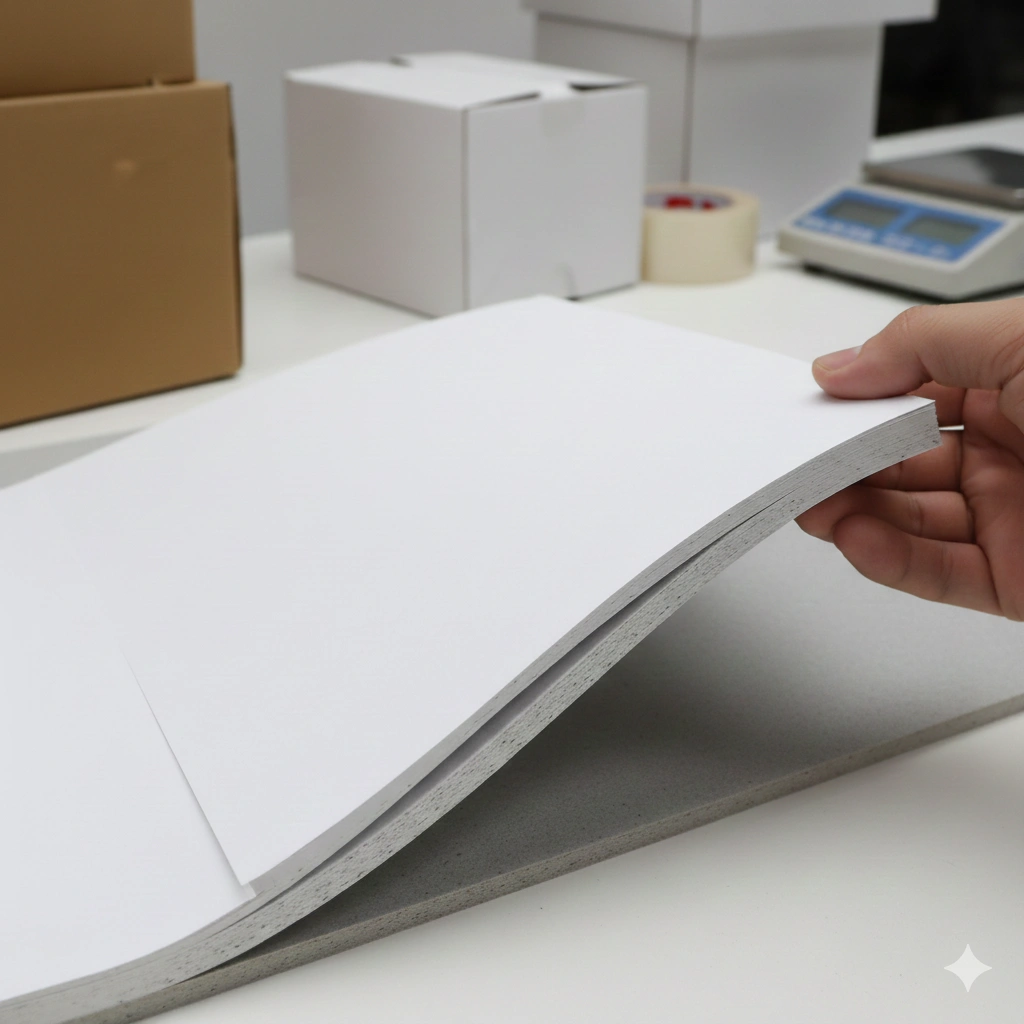
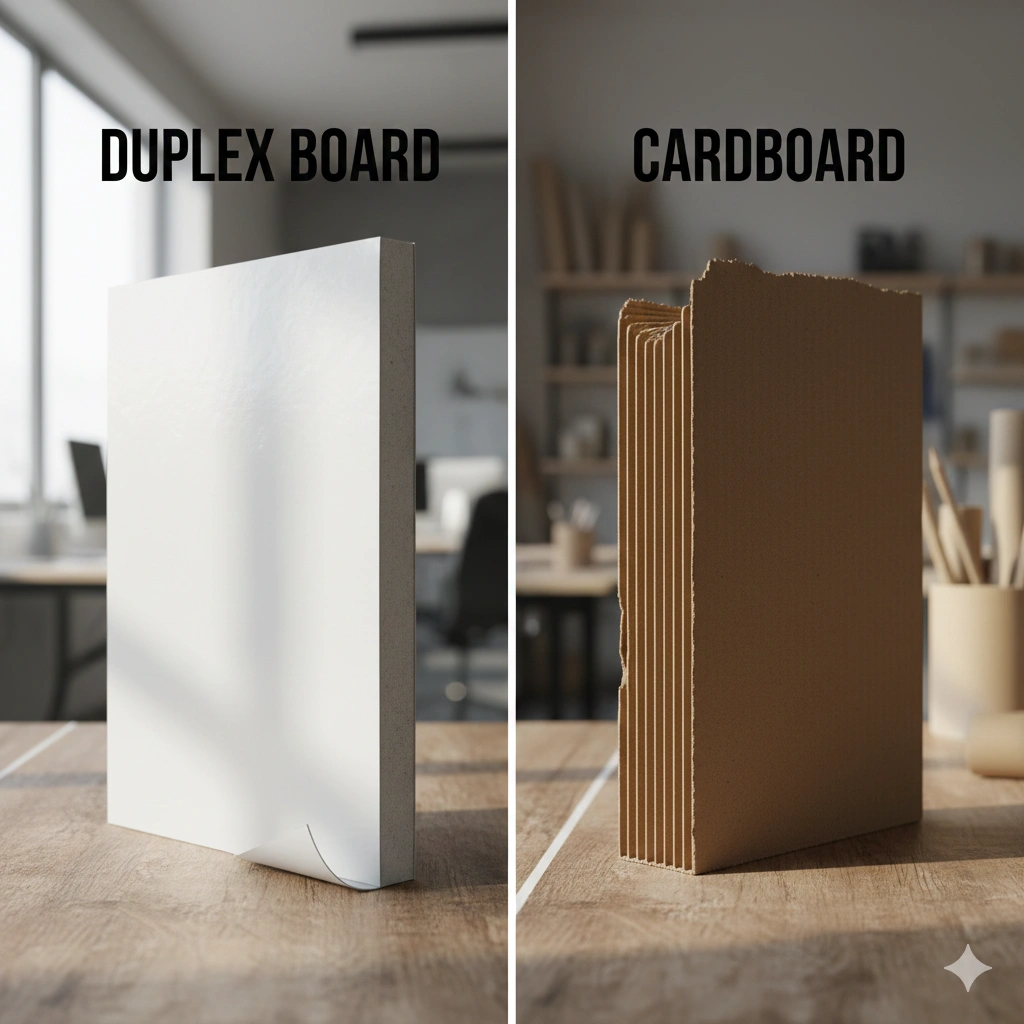
Duplex board is a multi-layered paperboard made with a smooth white-coated top surface and a grey or white back layer. It is widely used for premium printed packaging due to its strength and excellent surface finish.
One of the most commonly used types is duplex board grey back, which features a white printed surface and a grey reverse side. This makes it cost-effective while still delivering high-quality printing. Another advanced option is coated duplex board, which includes an additional coating layer that enhances moisture resistance and ink absorption.
Duplex board with grey back is widely used in FMCG boxes, pharmaceutical cartons, cosmetics packaging, and retail display boxes. Because of its print-friendly surface, duplex board packaging is often preferred for products that require strong visual branding.
What Is Cardboard?
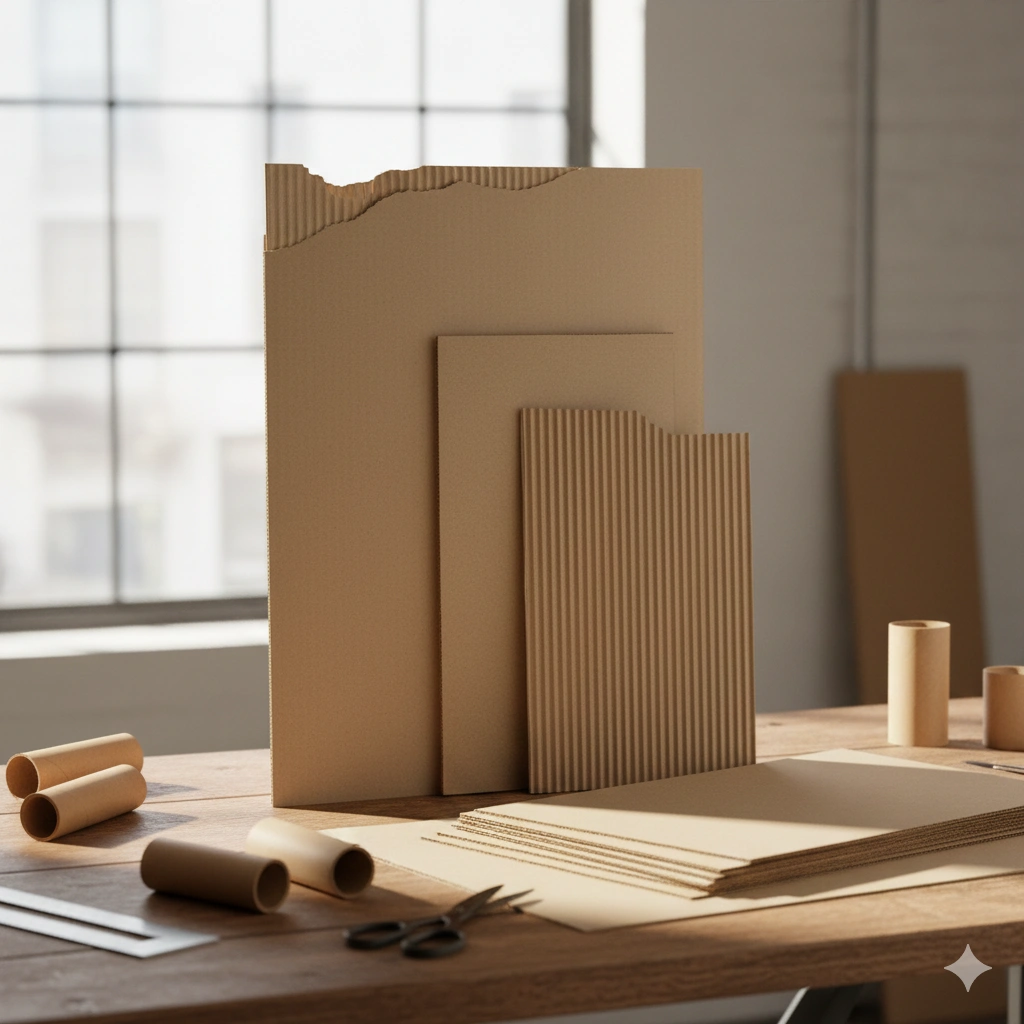
Cardboard is a broad term that generally refers to thick paper-based materials used for shipping and storage. It is lighter than duplex board and offers excellent flexibility for packing and transportation.
The most common types include:
• Single-wall cardboard
• Double-wall cardboard
• Triple-wall industrial cardboard
These formats are extensively used to create cardboard boxes, large cardboard boxes, and cardboard storage boxes for shipping and warehousing. Most packing boxes used in logistics and e-commerce are made of corrugated cardboard because of its lightweight strength.
From small retail cartons to heavy-duty export cases, cardboard packaging supports nearly every industry, including food, electronics, garments, and automotive parts.
Duplex Board vs. Cardboard: Quick Comparison Overview
|
Criteria |
Duplex Board |
Cardboard (Corrugated & Chipboard) |
|
Appearance & Printing |
Excellent – smooth, bright white surface |
Poor to fair – brown/grey, rough texture |
|
Structural Strength |
High rigidity for folding cartons |
Superior for corrugated; moderate for chipboard |
|
Thickness/GSM |
230–550 GSM |
100–1000+ GSM (varies by type) |
|
Moisture Resistance |
Moderate (improved with coatings) |
Low unless specially treated |
|
Recyclability |
Yes (coatings may complicate process) |
Yes – among the most recycled materials |
|
Cost |
Medium to High |
Low |
Both materials serve different market priorities. The best choice always depends on product type and brand requirements.
Strength & Durability: Which Material Performs Better?
When it comes to impact resistance during transport, cardboard especially double-wall and triple-wall varieties performs exceptionally well. This makes large cardboard boxes ideal for heavy or fragile shipments.
However, duplex board offers higher surface rigidity and better stacking strength for retail cartons. It resists bending under compression and maintains its shape even with heavy printed finishes.
If your business prioritizes structural presentation and flat strength, duplex board packaging delivers superior durability. If shock absorption and transport safety are key, cardboard becomes the smarter choice.
Print Quality & Branding Impact
Print quality is where coated duplex board outperforms cardboard significantly. Its smooth surface allows sharp colors, premium finishes, embossing, lamination, and UV spot printing.
On the other hand, cardboard boxes have a textured surface that limits detailed color reproduction. Branding on cardboard is functional, not premium.
Businesses in cosmetics, pharmaceuticals, electronics, and FMCG often choose duplex board packaging because packaging quality directly affects consumer perception and shelf appeal.
Thickness, Weight & Handling Comparison
Cardboard is generally lighter and more flexible, making it easy to fold, stack, and transport. This also reduces freight costs for bulk shipments.
Duplex board, while heavier, provides greater stiffness and better product shape retention. However, it requires more careful handling during transport due to surface sensitivity.
For warehouse-heavy operations using cardboard storage boxes, cardboard simplifies logistics. For premium retail packing, duplex board ensures better structural performance.
Water & Moisture Resistance Performance
Moisture resistance is a critical consideration in storage and transport. Coated duplex board offers moderate protection against humidity due to its surface treatment.
In contrast, standard cardboard packaging absorbs moisture quickly in humid conditions. This can weaken structural integrity and affect product safety.
For food, pharma, and export shipments exposed to moisture, duplex board offers better surface protection when proper coatings are used.
Cost Comparison: Duplex Board vs. Cardboard
From a cost perspective, cardboard is significantly more affordable. It is produced in large volumes using recycled materials, which keeps prices low.
Duplex board, especially coated duplex board, carries a higher manufacturing cost due to its layered construction and premium print surface.
If your business focuses on mass shipping using packing boxes, cardboard offers the best cost efficiency. However, for retail branding and shelf-ready packaging, the added cost of duplex board is often justified through better product positioning.
Common Applications: When to Choose Which
Choose Duplex Board When You Need:
• Premium retail and gift packaging
• Pharmaceutical and cosmetic folding cartons
• Food-safe takeout boxes, cake bases, frozen food trays
• Export packaging where weight directly affects freight cost
• Vibrant full-color printing without extra stickers
You’ll see coated duplex board and duplex board grey back everywhere from iPhone boxes to luxury chocolate packaging.
Choose Cardboard When You Need:
• Heavy-duty e-commerce shipping boxes
• Large cardboard boxes for furniture or appliances
• Protective layers, dividers, or edge guards
• Budget-friendly cereal, toy, or shoe boxes (chipboard)
• Maximum stack strength in warehouses
Corrugated cardboard boxes and cardboard storage boxes remain the undisputed kings of logistics and storage.
Environmental Impact & Sustainability Comparison
Cardboard is among the most recyclable packaging materials in the world. It decomposes quickly and supports circular economy models.
Duplex board is also recyclable, but the coating layer can slightly limit recycling efficiency depending on treatment type.
With growing sustainability mandates, many businesses now source packaging from environmentally responsible duplex board suppliers who use water-based coatings and recycled pulp.
Storage & Transportation Efficiency
From a warehousing standpoint, cardboard storage boxes allow efficient stacking and shock absorption during long-distance shipping.
Duplex board packaging requires controlled storage to avoid surface damage and moisture exposure.
For exporters managing long supply chains, cardboard offers higher safety. For controlled retail supply chains, duplex board delivers higher visual quality.
How to Choose Between Duplex Board and Cardboard for Your Business
Your ideal choice should be guided by:
• Budget size and production volume
• Branding focus and print requirements
• Product fragility and load weight
• Storage humidity exposure
• Domestic vs export shipping
Retail-focused companies benefit more from duplex board, while logistics-driven businesses depend on cardboard boxes for scalable efficiency.
Common Mistakes When Selecting Packaging Material
Many businesses make errors such as:
• Choosing only based on price
• Ignoring storage humidity conditions
• Overusing premium board where protection is enough
• Selecting incorrect GSM thickness
• Failing to consult experienced duplex board suppliers
Avoiding these mistakes helps reduce returns, transport damage, and branding inconsistency.
Why Choose Edicon Paper Product for Duplex Board & Cardboard Solutions
Edicon Paper Product is a trusted name among leading duplex board suppliers, delivering consistent quality, reliable strength, and superior print performance. With a strong focus on manufacturing excellence, Edicon offers a complete range of duplex board with grey back, coated duplex board, and premium packaging-grade boards suitable for pharmaceutical, FMCG, cosmetic, and retail industries. Every batch undergoes strict quality checks to ensure uniform thickness, smooth coating, and dependable durability.
In addition to duplex solutions, Edicon also supports a wide spectrum of cardboard packaging requirements, including cardboard boxes, packing boxes, and bulk shipping materials. With a customer-focused approach, timely supply chain support, and sustainability-driven production practices, Edicon Paper Product helps businesses achieve both performance efficiency and eco-conscious packaging goals.
Packaging Board Selection Guide
Conclusion
Choosing between duplex board and cardboard ultimately comes down to your packaging purpose, brand positioning, and logistics needs. If your primary focus is high-quality printing, strong shelf presence, and premium product presentation, duplex board packaging offers a clear advantage. It enhances visual appeal, supports branding, and delivers excellent flat strength for retail environments.
On the other hand, when protection during transport, cost efficiency, and bulk storage are the top priorities, cardboard packaging remains the most practical solution. From large cardboard boxes to heavy-duty shipping cartons, cardboard continues to dominate logistics and e-commerce operations. By understanding your product requirements and supply chain conditions, you can confidently select the packaging material that brings long-term value to your business.
Frequently Asked Questions (FAQs)
1. Is duplex board stronger than cardboard?
Duplex board provides higher flat rigidity and better stacking strength for retail packaging, while cardboard offers superior shock resistance during transportation and shipping.
2. What is duplex board grey back used for?
Duplex board grey back is commonly used for pharmaceutical cartons, FMCG product boxes, cosmetics packaging, and printed retail display cartons due to its balance of cost and print quality.
3. Which is better for food packaging cardboard or duplex board?
Cardboard is preferred for food transport and shipping due to impact protection. Duplex board is better suited for retail food packaging where branding and display quality are important.
4. Is coated duplex board waterproof?
Coated duplex board is moisture-resistant but not completely waterproof. For higher protection, additional lamination or surface treatments are recommended.
5. Are cardboard boxes better for shipping than duplex board packaging?
Yes, cardboard boxes are generally better for shipping because they absorb shock more effectively and perform well during long-distance transport.